Holy Week Devotional
Through these daily readings, walk with Jesus in real time through the week leading up to his crucifixion and resurrection. Each day will provide you a reflection on what’s going on beneath the surface of the story, a reading in scripture, and a few questions to help you reflect on how this can transform you. Your Holy Week bookmark also contains more scripture passages you can read to dig deeper into the story itself.
Parents of 1-6th grade kids: We encourage you to use these devotionals for your own growth first, and then to help your kids grow—just like the safety instructions on an airline flight: “secure your own oxygen mask before assisting others.” We suggest you use the main devotionals for your own study, and the “For Families” sections to guide your kids in a simpler look at the Holy Week story.
The Triumphal Entry (Palm Sunday)
Tears from Jesus
Jesus was on his way to Jerusalem, the city where God dwelt with his people in his temple. It was five days before the people would celebrate Passover, a feast to remember when God saved them from being slaves in Egypt. On the way there, Jesus had his disciples bring a young donkey for him to ride, and the people who were following him recognized what it looked like: Jesus was riding toward the city of God’s people like a king. They shouted a word that means “save us!” Hosanna! But before Jesus went into the city, he stopped. Everyone around him had been putting their coats on the ground for his donkey to walk on, honoring him as a king. They were waving palm branches around – that’s what people did when a conquering leader came home from war. They truly believed that Jesus was God’s king, who had come to save them.
But Jesus knew that there were many people who didn’t understand what he was really there to do, and he knew that most of his own people were going to reject him—many already had. He stood still, looking at the city of Jerusalem from the outside, and he cried.
Read: Luke 19:29-47
1. Why do you think Jesus wept when saw the city of Jerusalem?
2. Describe a time when you feel like you rejected Jesus.
3. Is there anyone in your life that you know is currently rejecting Jesus? How is God
calling you to respond?
For Families:
Read together: Mark 11: 1-11, Luke 19: 29-44
1. What did Jesus tell His disciples to get from the village?
2. What did the people shout as Jesus entered the city, and what does it mean?
3. Why did Jesus cry?
4. How do you think the disciples felt?
Additional readings:
- Matthew 21:1-11
- Mark 11:1-11
- Luke 19:29-44
- John 12:12-19
MONDAY
A Den of Robbers
Jesus was staying with friends in a town close to Jerusalem, called Bethany, going back and forth each day. The next day when he came back to Jerusalem, he went to the temple. The temple was the most important place in the city, the place where God met with his people. It’s where they brought their sacrifices to offer to God. It’s where the priests did their work to follow the Lord’s instructions to keep the temple holy and pure for his presence to stay with them. When Jesus walked in, he saw business being done – people selling doves for sacrifices, exchanging Roman money for temple money, and making a profit. Just like the
day before, he felt a strong emotion – but this time, it was anger. He started knocking over the tables and carts, interrupting business and causing quite a scene. He quoted from two Old Testament prophets: Isaiah and Jeremiah. Both of these prophets were known for the way
they warned Israel about rejecting God. Jesus saw it happening, and he knew that even though he was God’s son, sent for them, they were just about to reject him, too.
Read: Isaiah 56:1-8; Jeremiah 7:1-15
Context: Jesus quoted from these two passages when he ran the moneychangers out of the temple. Isaiah 56:7 – “my house shall be called a house of prayer for all peoples,” and Jeremiah 7:11 – “has this house, which is called by my name, become a den of robbers in your eyes?” Isaiah was saying that even foreigners who were not part of Israel would be able to belong to God if they followed him. God’s purpose in giving Israel his presence in the temple was for Israel to draw all people to him through justice and mercy. Jeremiah was saying that God would soon destroy the temple because people were unfaithful to him, worshiped other gods, and yet still came and pretended to worship in his temple.
1. What distractions can keep you from genuine worship?
2. Why do you think believers often fall short to fulfill their role as a witness to the nations?
3. How is God leading you to take part in drawing all nations to him?
For Families:
Read together: Mark 11: 15- 19, Luke 19: 45-47
1. What town was Jesus visiting in today’s reading?
2. Where was the temple located?
3. Why was the temple the most important place in the city?
4. What were the people doing in the temple that made Jesus so angry?
5. How do you think you would respond to this situation?
Additional Readings:
- Matthew 21:12-22
- Mark 11:12-18
- Luke 19:45-48
TUESDAY
The Beginning of the End
Jesus had spent the day back in the temple, teaching. The leaders in Jerusalem were looking for ways to arrest Jesus, but he was too popular for them to get away with it yet. As he was leaving the temple that day, the disciples pointed out how impressive the buildings were, and how huge the stones were. He told them that the whole place was going to be destroyed. They went up to a hill outside the city, where there was a good view of the temple and sat down. Jesus’ disciples knew that God’s temple had been destroyed before. Back when Jeremiah was still a prophet, his warnings (we read one of them yesterday) had come true: the temple was destroyed and the people were taken into exile. It was God’s punishment. The temple Jesus and the disciples were looking at now was a second temple, rebuilt when the people returned home from exile. They knew that this place wasn’t invincible, and if God left, nothing could protect this place. So they asked Jesus when this was going to happen.
At the end of the same day, Jesus was back at Bethany, and at a friend’s house for dinner. A woman broke open a jar of very expensive perfume oil—usually used to honor royalty or to prepare a dead body for burial—and poured it on Jesus’ head. This oil cost about a year’s wages, and while some at the dinner thought it was foolish to waste it, Jesus said that what she had done was good. This was the final straw for one disciple: Judas Iscariot. Rejecting Jesus and his mission, Judas left and promised the leaders of the temple that he would find them a way to arrest Jesus. It was the beginning of the end for the temple in Jerusalem, and the beginning of the countdown to Jesus’ death.
Read: Mark 13:1-14:10
1. What do you think was going through the disciple’s minds when they heard Jesus say that the temple was going to be destroyed?
2. What are some sacrifices a person could make today to honor Jesus.
3. Describe a time when you have seen a person get mad at another for their sacrifice to Jesus.
For Families:
Read together: Mark 14: 1-10
1. Whose house was Jesus visiting?
2. What did the woman do with the oil?
3. Do you have something that is valuable? Would you be willing to give it to Jesus?
4. How did the people respond to the woman’s gift to Jesus?
5. What was Jesus’ response?
Additional Readings:
- Matthew 24:1-26:16
- Mark 13:1-14:11
- Luke 21:5-23:6
WEDNESDAY
Silence
The gospels don’t tell us anything that specifically happened on Wednesday. Remember on Sunday, when Jesus rode toward Jerusalem on a donkey? The people shouted “hosanna!” and “Blessed is he who comes in the name of the Lord!” (Mark 11:9). Their words came from the Old Testament – Psalm 118. This song celebrates the hesed of God. Hesed is a Hebrew word that means loyal, steadfast love. In the psalm, a king is returning from battle. He says that came near to failing, but God gave him success. The people in the psalm celebrate that the Lord has given success to the king – the one who comes in the name of the Lord. As you read this Psalm imagine a king who has trusted in God and has come through a fierce battle against God’s enemies with victory, and the people praising God for his love as the king returns to a celebration.
As You Read:
1. Why do you think the people were quoting this psalm as Jesus rode into Jerusalem?
Read: Psalm 118
For Families:
Silence
The gospel accounts don’t record any specific events that happened on Wednesday. Today, we will reflect on Sunday’s reading from Mark 11. The words that the people shouted came from the Old Testament book of Psalms. We will read the song that celebrates the hesed love of God.
Read together: Psalm 118
1. Over and over again, you see the LORD mentioned in today’s Psalm. Do you remember what “LORD” is in Hebrew? (Yahweh)
2. What is the Hebrew word for the LORD’s steadfast love? (Hesed)
3. Did you learn anything new about the LORD from today’s Psalm?
THURSDAY
Bread and a Cup
A lot happened on Thursday. It was the day for the Passover meal, and Jesus had his disciples get the meal ready. Passover was a celebration and memory of the night that God rescued his people, Israel, from the tenth plague in Egypt. Because the Pharaoh wouldn’t let Israel go free, God passed through Egypt and sent a destroyer to kill the firstborn of every family, even from the livestock, all through the land. But God’s people were to pick out a year old spotless lamb and prepare it for a meal. Some of the lamb’s blood was to be brushed on the door of every Israelite house, to show that they were sharing in the meal that God had instructed, and they were to be protected from the destroyer. (Read more about this in Exodus 11 and 12.)
When Jesus ate the Passover with the disciples, he came to the end of the meal, and took some of the unleavened bread, and tore it into pieces for them to eat. He told them that whenever they ate this bread, it would remind them of his own body that would be broken for them. He took a cup of wine and shared it with them, and said that it was his blood of the covenant, poured out for many for the forgiveness of sins.
After dinner, Jesus and his disciples went to a garden called Gethsemane to pray, and Jesus knew that this was where Judas would find him and hand him over. This was the moment of Jesus’ greatest distress: he saw that he was about to start the last leg of the journey to his death, and he was about to
go through the darkest part of his mission. He called the suffering he was about to undergo a “cup” that he had to drink. He prayed and asked his Father, “if it be possible, let this cup pass from me; yet not as I will, but as you will.” (Matthew 26:39). The rest of the disciples dozed off, and he urged them to pray too. He knew that they would eventually have to drink the same cup as him (Matthew 20:23). But tonight, they would all abandon him and run away when Judas showed up with soldiers to arrest him.
Read: Matthew 26:17-69
1. What is the cost of following Jesus and sharing in his body and blood?
2. How does it affect you to know that Jesus prayed that the cup could pass from him,
but that he still chose to follow the Father’s will?
For Families:
Read together: Matthew 26: 17-69
1. What meal did Jesus and His disciples just finish?
2. What does Jesus tell the disciples that the bread and wine represent?
3. What was Jesus doing in the garden of Gethsemane?
4. When Jesus was arrested, did He fight the guards, or did He willingly go with them? Why is this important?
Additional readings:
- Matthew 26:17-75
- Mark 14:12-72
- Luke 22:7-65
- John 13:1-18:27
FRIDAY
A Crowd, a Crown, and a Cross
Thursday night was long and sleepless. All through the night, Jesus was interrogated and accused of blasphemy by the leaders of the Jews, who should have recognized him as their king. Even Peter, the boldest disciple, had lied three times to a few stragglers, denying that he knew Jesus. By the time morning came, exhaustion must have already been setting in. But the day was just beginning.
Jerusalem was run by the Romans, who kept a fragile peace with the Jews. The local governor, Pilate, had a tradition of setting a prisoner free to please the crowds gathered for Passover. When the leaders of the people brought Jesus to Pilate Friday morning, he found himself with a choice – offer the crowd this Jesus, or a different one; Jesus Barabbas, a well-known prisoner. The chief priests worked the crowds and made sure that when the time came, they would scream for Barabbas, not the Messiah, to be released, and they would demand for Jesus to be crucified. The scene couldn’t be more different from Sunday, when disciples and supporters surrounded Jesus to escort him toward the city in a royal
procession. Today, the crowd cried “His blood be on us, and on our children!” (Matthew 27:25). Less than a week ago, Jesus’ followers had welcomed him as the king who had come to save them; today, soldiers crowned him with thorns, and treated him like a joke. Jesus was nailed to a cross. It was the most painful and most shameful way the Romans had
devised to execute someone. Before he died, Jesus cried out loudly, “Eli, Eli, lema sabachthani?” It was the first line of a psalm, ”My God, my God! Why have you abandoned me?”
Read: Matthew 27:1-62
1. What do you think the people who loved and believed in Jesus were feeling through the day on Friday as Jesus was mocked and crucified?
2. In Matthew 27, what stands out to you about the way Jesus responded to Pilate, the soldiers, and the crowds?
For Families:
Read together: Matthew 27: 11-54
1. Who was the criminal who was released instead of Jesus?
2. What did the crowd shout as Jesus stood before Pilate?
3. Could Jesus have come down from the cross if He wanted to? Why didn’t He save Himself?
4. When Jesus died, what happened to the veil in the temple?
Additional readings
- Matthew 27:1-66
- Mark 15:1-47
- Luke 22:66-23:56
- John 18:28-19:42
SATURDAY
The Day of Rest
A wealthy Jewish leader had arranged for Jesus to be buried in his family tomb. Following the command of scripture (Deuteronomy 21:22-23), Jesus’ body was taken down from the cross before the night came. On the Sabbath, the day of rest, Jesus’ body lay in a dark rock tomb, locked in with a heavy stone, guarded by soldiers.
On the cross, Jesus had cried out the opening line of Psalm 22: “My God, My God, why have you forsaken me?” Every Jewish person in the crowd would have recognized the reference. Today, read and meditate on this Psalm.
As You Read:
1. Pay attention to how the Psalm starts, what kind of story it tells, and how it ends.
2. This Psalm is attributed to King David. What do you think he was feeling?
3. Did God truly abandon David, according to this Psalm? What do you think that means about whether God truly abandoned Jesus on the cross?
Read: Psalm 22
For Families:
The Day of Rest- Saturday
After Jesus’ death on Friday, His body was taken down from the cross and placed in a borrowed tomb. A stone was rolled over the opening, and guards were placed outside to stand watch. Something Jesus said as he hung on the cross can be found in today’s reading.
Read together: Psalm 22
1. We have been Exploring the Bible this semester. Do you know who wrote this Psalm?
2. What kind of book is Psalm?
3. Do you notice a phrase in Psalm 22 that was in yesterday’s reading? What is it?
4. Does anything stand out to you in the Psalm?
SUNDAY – Easter
All Authority
A few women who followed Jesus visited his tomb early on Sunday morning. Instead of a dead body, they met a messenger of God, who told them that Jesus was alive, and to go tell all the other disciples. Then they saw Jesus. They bowed down, and Jesus told them “Don’t be afraid! Go tell my brothers and sisters to head to Galilee; they’ll see me there.” When the eleven disciples (Judas Iscariot, who had given Jesus up to the authorities, was dead) met Jesus on the mountain in Galilee, he answered their doubts with a declaration: All authority in heaven and on earth has been given to me.” Because he had passed through death and defeated it, he had taken his place at the throne of God. The one who had lowered himself to the depths of our human suffering had now been raised to the highest position in the universe! And with that authority, he commissioned his disciples: “Go therefore and make disciples of all nations, baptizing them in the name of the Father and of the Son and of the Holy Spirit, teaching them to observe all that I have commanded you. And behold, I am with you always, to the end of the age.”
Read: Matthew 28:1-20
1. Why do you think the angel and Jesus told the women not to be afraid?
2. How does Jesus’ resurrection empower you to lead the people you know to become disciples of Jesus?
For Families:
Read together: Matthew 28: 1-18
1. What happened to the stone in front of the tomb?
2. What did the angel say to the women?
3. When Jesus appeared to His disciples, what command did He give to them?
4. How can YOU be a part of this mission?
Additional readings:
- Matthew 28:1-15
- Mark 16:1-11
- Luke 24:1-49
- John 20:1-25
Service Details
Read below to find more information about our services!
Palm Sunday
9:00 am & 11:00 am
Good Friday
5:00 pm & 7:00 pm
Easter Saturday Service
6:00 pm
Easter Sunday
9:00 am & 11:00 am
Join us this Holy Week!
This Holy Week, we are digging beneath the surface of an all too familiar story. This year, our services will be led by our Student Ministry, and we’re excited and expectant for all the Lord will do through these services. We can’t wait to experience this meaningful week together as a church family.
We're creating extra space for everyone by offering services in the Studio and the main Worship Center. Invite your friends or family!
The Week of the Passion: You know the story—but do you know why?
You’d be hard-pressed to find someone in West Knoxville who hasn’t heard the Easter story. But if you asked what it actually means, many might struggle to give a clear answer. Christians place their entire hope in this story—so why is it so significant?
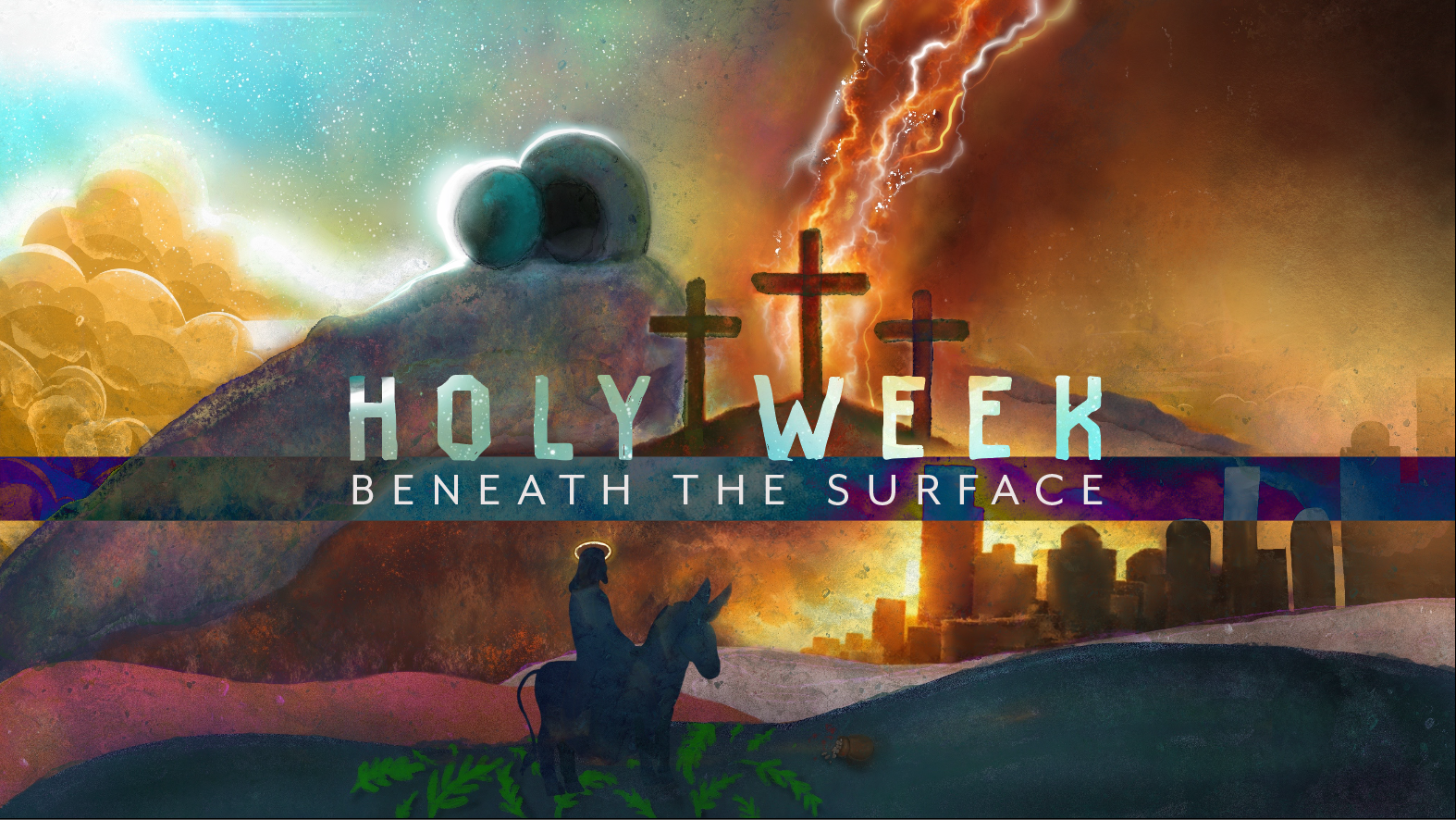
Join us as we journey through Holy Week: Beneath the Surface, where we’ll explore the depths of God’s rescue mission, the reality of our sin and need for salvation, the beauty and brutality of the cross, and the magnitude of the story and mission King Jesus invites us into.
Our prayer is that this week-long journey won’t just inform you, it will transform you.
New to Providence?
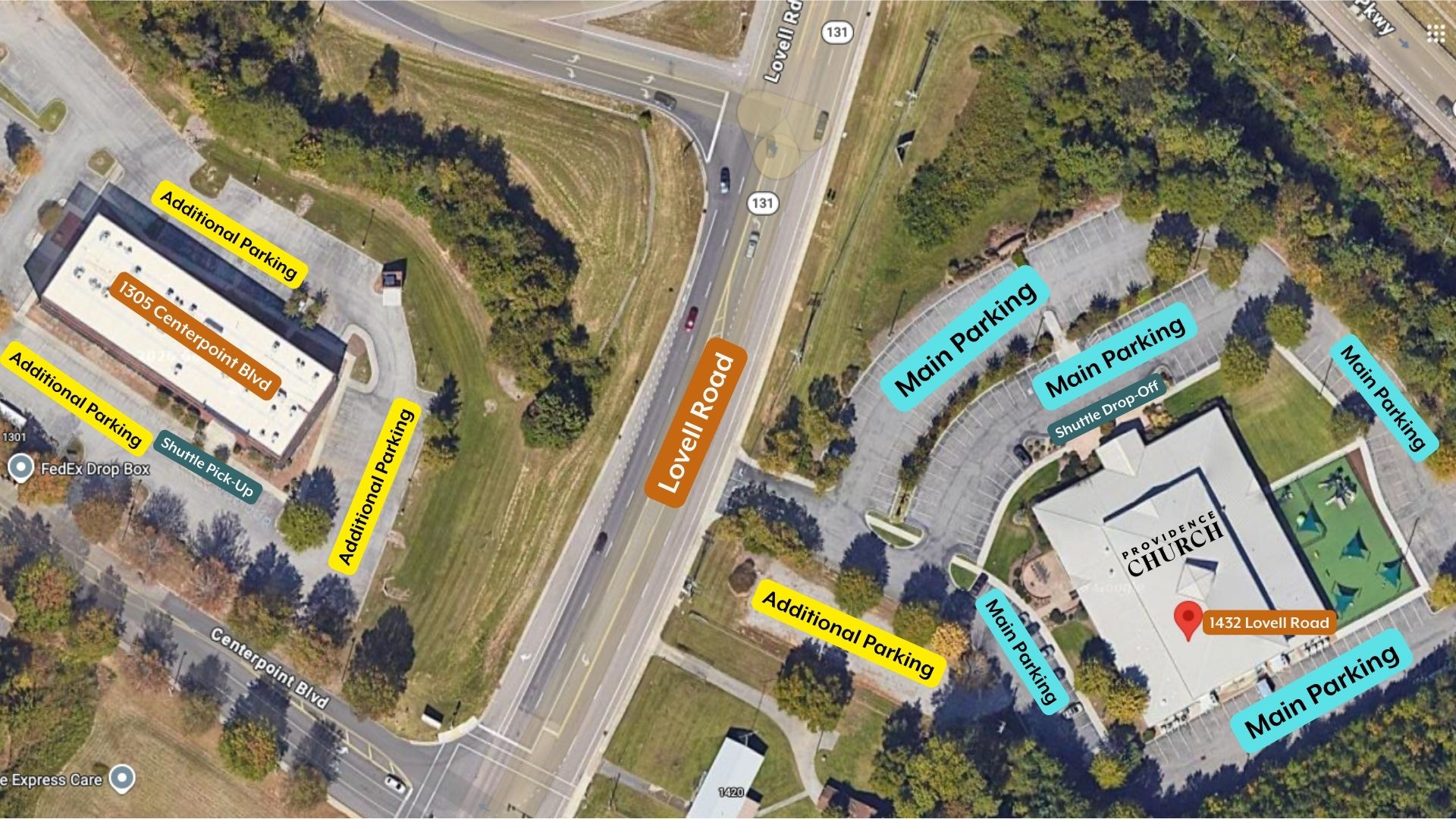
We offer additional parking across the street to help keep the main lot available for new attendees and those who need closer access. A shuttle will run until services begin, but we encourage everyone to arrive a little early to make parking, seating, and getting settled as smooth as possible. Arriving early also gives you the opportunity to meet someone new or connect with others before the service starts.